We make eave lighting.
We make all of it.
IDIF is a permanent eave lighting manufacturer. The aluminium is extruded here, the boards are populated here, the modules are potted here, and the carton carries your label — all inside one 6,000 m² building with one address on the export documents.
- Six production stations, none subcontracted
- Four of our own extrusion dies, not a catalogue of imports
- Batch colour binning against your signed sample
- OEM, ODM and private label on the same line
- Plant opened
- 2013
- Manufacturing floor
- 6,000 m²
- Production, QC, engineering
- 100+
- Track shipped per year
- 1.2M m
- Export markets
- 30+
- Marking
- CE · RoHS · UKCA · ETL
- Warranty
- Up to 5 years
An eave light is a roof component that happens to glow.
The eave takes more water than any other line on a building. Runoff collects there, wind drives it sideways, and ice sits on it for a week in February. A fixture that treats that as a lighting problem has already lost the argument.
Most of what is sold as permanent outdoor lighting is bought in: one supplier for the module, another for the profile, a third for the driver, and a brand name over the top. Three sets of tolerances, three inspection reports, and no single party who can say why batch 40 does not match the sample you signed.
We kept the stations. Not for the vertical-integration brochure — so that when a batch fails IP67, we know which machine to open and which person to ask.
Six stations, one address.
Follow a metre of track through the building. Nothing on this list leaves the property between the billet and the carton.
The profile is ours
Four dies cut the sections we sell, including the flange that actually keeps water out. Buying extrusion outside is cheap until a supplier changes and the wall comes back thinner than the sample.
Boards populated in-house
Reflow runs on our floor and the LED bin is the one you specified. When a buyer names a brand of chip, we do not substitute quietly and hope the CCT lands close.
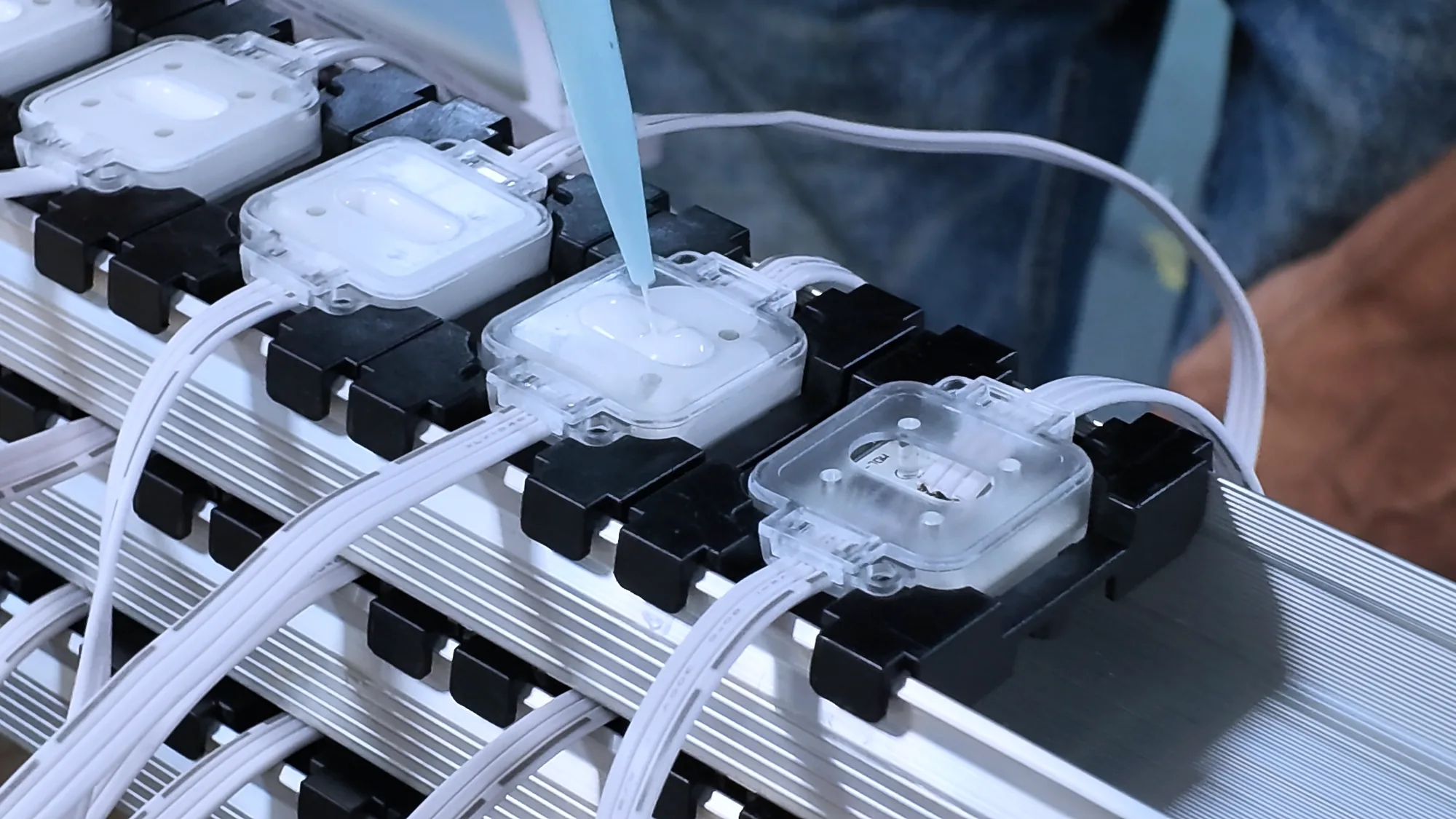
Poured full, not smeared
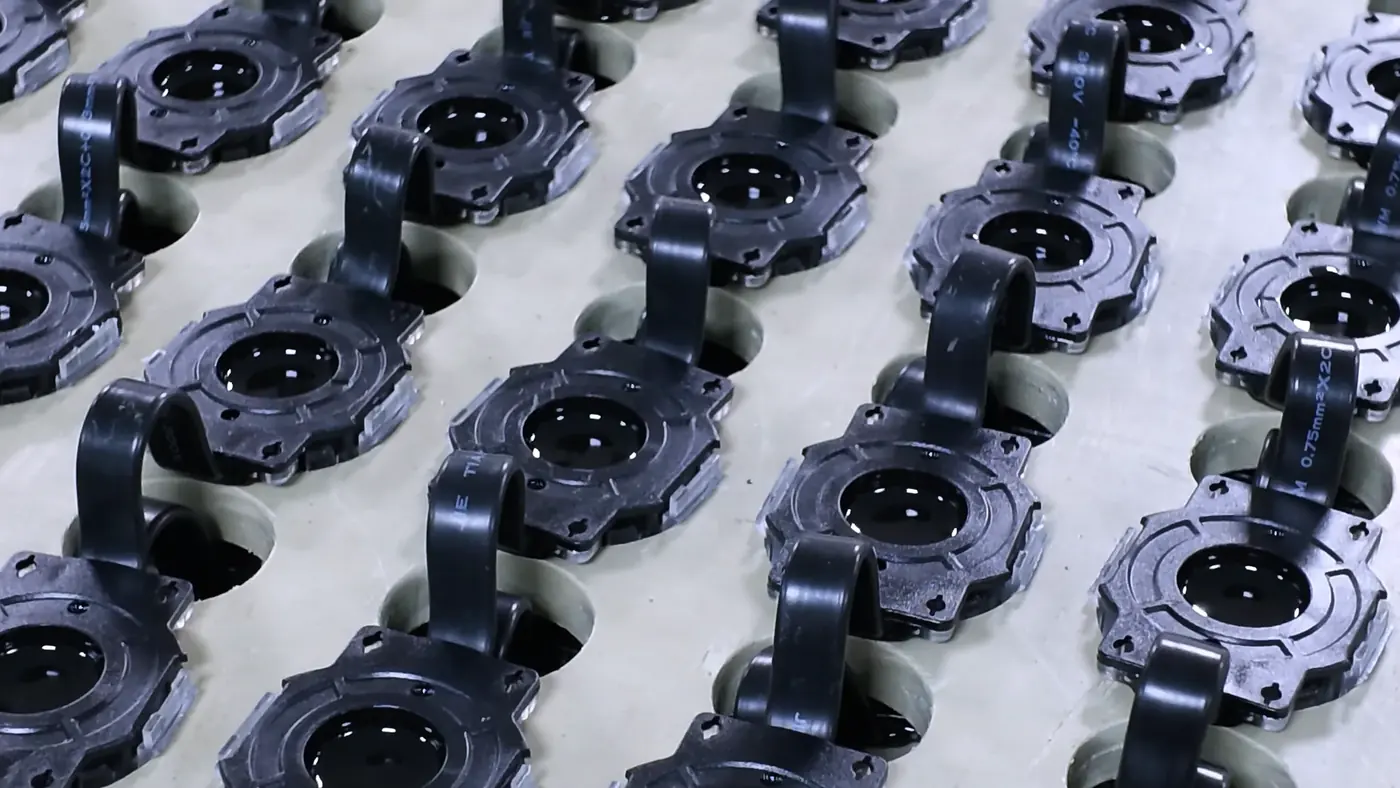
Compound goes in until it meets the lens. No air pocket means nothing to condense in a July roof space, and a bubble left now is a water path in year five.
72 hours before it counts
Every batch goes on the burn-in rack under UV. Early failures belong in our scrap bin, not in your second container.
Seated by hand
Modules seated, connectors torqued, gaskets inspected at the bench. This is the station that decides whether the joint survives its first winter on the roof.
Your label, your language
Printed cartons, installation sheets in the destination language, barcodes and pallet marks to your retailer’s routing guide. The last station should look like your warehouse, not ours.
Inside the building.
No studio lighting, no borrowed machines. Four bays from the line your order runs on — the machines, not the brochure.
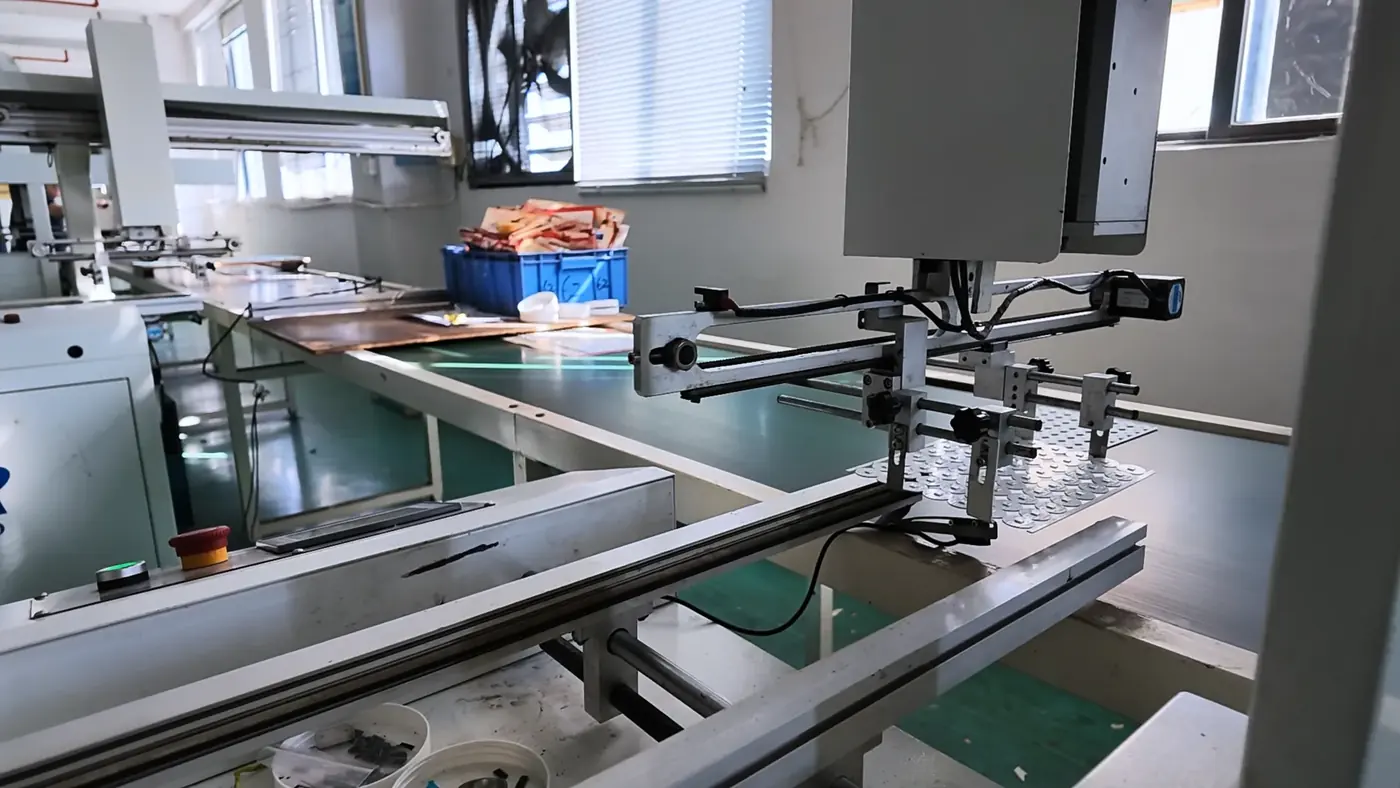
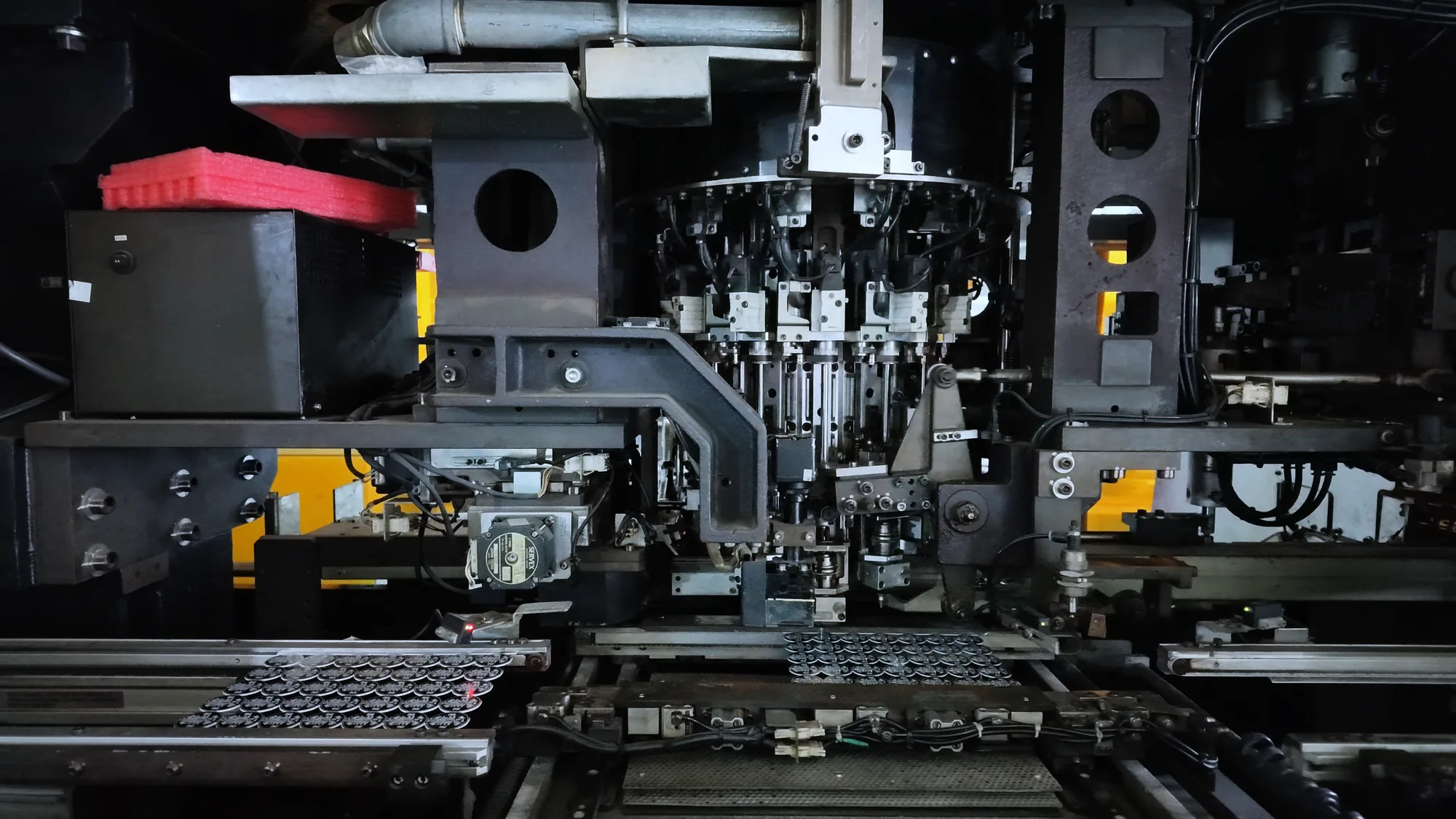
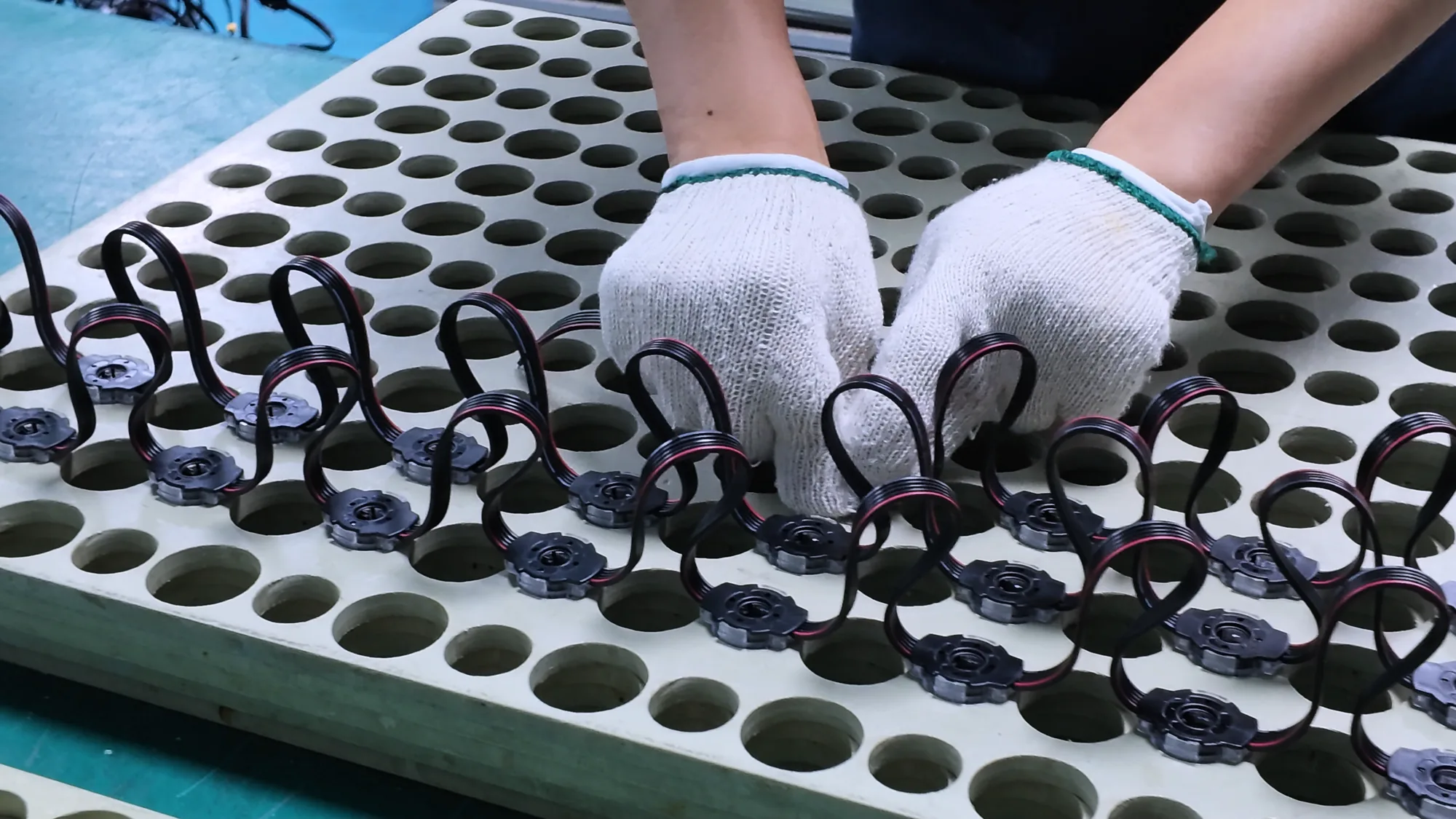
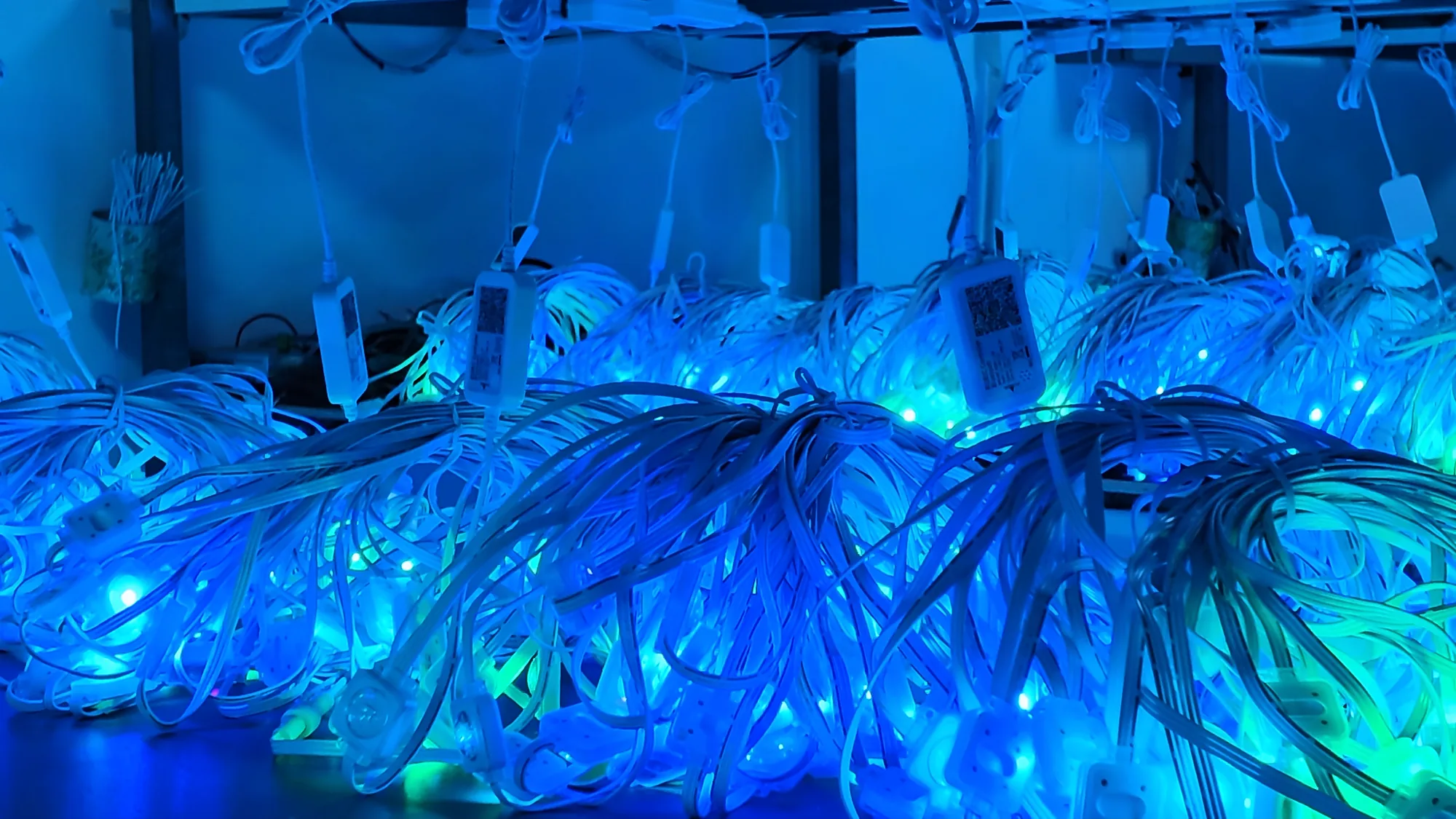
The people who quote your job sit on the same floor as the potting line.
There is no separate trading office and no overseas agent relaying questions. Three desks handle almost everything a buyer asks before the first container.
Application engineering
Your drawing lands here first, not with sales. The reply is usually a marked-up section plus the two or three points that will cost you money later — corners, jumpers, where the driver goes.
Tooling & extrusion
Section, wall thickness, flange, finish. They will tell you when a shape you like is a new die and a four-week lead, and when an existing profile gets you there in seven days.
QC & ageing
Batch IP67 check, colour binning, the ageing log. When something is wrong they say so before the pallet is wrapped, which is the only moment the answer is still cheap.
What we don’t do.
Four things buyers ask about directly, answered before they have to ask twice.
-
01
We don’t pretend to be the only brand on the line.
The plant builds for more than one label. IDIF is the one we sell ourselves. Buyers find this out eventually — on a carton, at a trade fair, from another importer — and it is a worse conversation then than now. What we will not do is put two names on the same profile and sell both into the same market.
-
02
We don’t quote without a section.
Send a length and a wattage and you get a range, not a price. A range is useless in a tender. Give us the profile, the run lengths and the CCT and the number holds, because it was built from a die and a BOM rather than a guess.
-
03
We don’t take an order we can’t age.
Lead time is set by the burn-in rack, not by what a salesperson promised. If the rack is full we either move your date or tell you we cannot take the job. Both answers arrive in the same email.
-
04
We don’t ship a batch that drifted from the sample.
The metre you approved is the standard, not a reference photo of it. A run that reads differently under the light box stays in the building while we work out why — even when the ship date is already on the calendar.
Paperwork that survives the border.
Prepared for the destination market, not printed once and posted on every page. Ask for the pack and it arrives as a folder, not eight separate emails.
Need the full set for a specification? Request the documents pack.
Factory and office share one building, in Guzhen.
Visits start at the sample wall and end on the floor. Bring the drawing you are working from — the answer is usually faster with the section in front of us than in an email thread.
- Factory
- 6th Floor, No. 398 Haizhou East Bank
North Road, Guzhen Town
Zhongshan, Guangdong 528422, China - Office
- Same building as the line
- Phone
- +86 189 2811 4374
- info@ledmediafacade.com
Visits Monday to Saturday, 08:30–18:00 GMT+8. Two working days’ notice and the line will be running when you arrive.
Come and walk the floor.
Zhongshan sits between Guangzhou and Shenzhen. Give us two working days and name the station you want to see; it will be running when you arrive — a stopped line teaches you nothing.
Samples from 1 pc · Reply within one business day